Sudan'ın El-Fasher'ı: 1 Milyon Eski Sudanlı Kıtlık ve Toplu Ölümlerle Karşı Karşıya
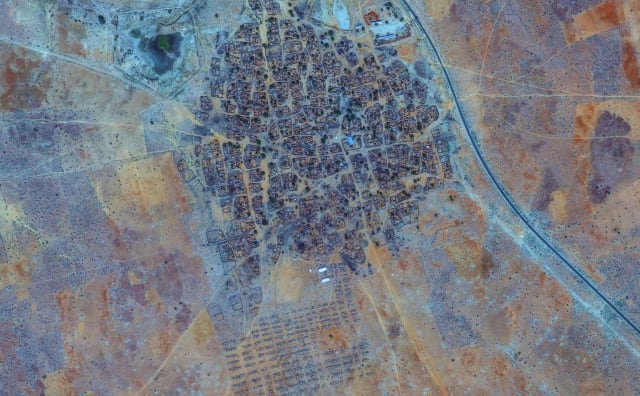
El-Fasher, the capital of Sudan’s North Darfur state, remains largely deserted nearly two months after being captured by the paramilitary Rapid Support Forces (RSF) in October, according to a United Nations assessment. The city fell following an 18-month siege, during which mass atrocities - including massacres, torture, sexual violence, and forced detentions - were reported. Satellite imagery reviewed by AFP shows what appear to be mass graves, highlighting the scale of the human toll. Denise Brown, the UN’s humanitarian coordinator in Sudan, described El-Fasher as a “crime scene” but said her office would focus on restoring aid to survivors while human rights experts conduct investigations.
Brown said the city is Sudan’s “epicentre of human suffering” and described it as a “ghost of its former self,” noting that once-populous areas are now largely destroyed. Many residents remain in precarious conditions, sheltering in abandoned buildings or under basic plastic sheeting without sanitation or water. “These people are living in very precarious situations. Some of them in abandoned buildings. Some of them... in very rudimentary conditions, plastic sheeting, no sanitation, no water. So these are very undignified, unsafe conditions for people,” she said. Access for UN teams has been limited by unexploded ordnance and mines left from nearly two years of conflict.
During a brief visit last Friday, the UN team was able to inspect a struggling hospital and some abandoned UN premises, although medical supplies had run out. Brown noted that a small market was operating, offering only limited quantities of local produce like tomatoes, onions, and potatoes, indicating that residents could not afford larger purchases. She emphasized the severity of the humanitarian crisis: “There is a declared famine in El-Fasher. We've been blocked from going in. So there's nothing good about what's happened in El-Fasher.”
Since April 2023, Sudan has been engulfed in a civil war between the regular army and its former allies, the RSF, resulting in tens of thousands of deaths and forcing 11 million people from their homes. More than 30 million Sudanese now require humanitarian aid, though UN funding has been cut, forcing a halving of the 2026 appeal. The RSF, originally formed from the government-backed Janjaweed militias accused of genocide in the 2000s Darfur conflict, has consolidated control over Darfur and expanded into the Kordofan region, effectively splitting the country.
UN reports indicate that over 100,000 people fled El-Fasher after its capture, with 72 percent remaining within North Darfur state. Many were already internally displaced before the RSF advance, causing repeated displacements for some households. Overall, 1.17 million people originally from El-Fasher are now displaced, representing about 13 percent of all Sudanese IDPs.
Brown highlighted the difficulty in assessing the situation fully: “We weren’t able to see any of the detainees, and we believe there are detainees,” she said. UN teams were concerned about those injured or detained, as well as the few residents they did see. Reports from the Sudan Doctors Network and satellite imagery suggest systematic campaigns by the RSF to erase evidence of mass killings, including burial, burning, and removal of human remains. In nearby regions, over 200 people, including women and children, have reportedly been killed in ethnically targeted attacks.