Ukrayna: Sağlık Hizmetlerine Yönelik Saldırılar Artarken Kherson Doğumevi Vuruldu
Kherson maternity ward struck as attacks on Ukraine’s healthcare escalate and the fourth winter of full-scale war sets in
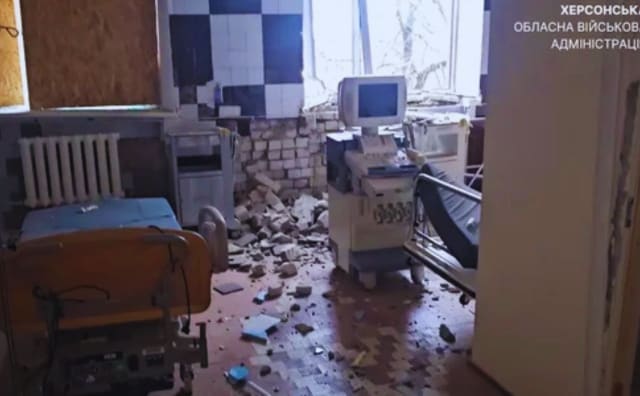
On Thursday, 4 December 2025, a maternity ward in Kherson was attacked, damaging walls, windows, doors, equipment, and water and gas supply. While healthcare staff, mothers, and newborns were able to seek shelter with no injuries reported, the attack further compromises healthcare access in one of Ukraine's most-affected regions, where medical services are already under severe strain. According to reports, more than 40,000 people in Kherson are without heating and electricity following the attacks.
Since the start of the full-scale invasion by the Russian Federation, WHO has verified 2,763 attacks on health care in Ukraine, as of 5 December 2025. These attacks continue to disrupt essential and life-saving services as well as putting the lives and health of patients and healthcare workers at serious risk across the country.
As winter sets in, the burden on Ukraine's health system grows
This means that the country faces a dual crisis: direct attacks on health care, including health workers, facilities and medical transport, and the cascading effects of strikes on civilian infrastructure. Disruptions to electricity, water and heating systems – experienced most acutely during winter months when temperatures drop to an average of minus 5–10 degrees Celsius – deepen the challenges of delivering health-care services in war-affected areas. WHO estimates that around 150 to 250 thousand patients in the frontline hospitals and maternity clinics may be left without heating and electricity. This winter, many women in Ukraine will give birth in the dark and cold; people recovering from injuries or heart attacks may have to contend with cold and damp wards; crucial cancer surgeries will be cancelled because power and water supplies have been knocked out.
Over three-quarters of attacks verified by WHO have targeted health facilities, while nearly one-quarter has impacted medical transport, including ambulances. This pattern has persisted throughout the last three years of full-scale war, systematically impacting the country's capacity to respond to medical emergencies. This year, WHO has documented a 12% increase in attacks on health infrastructure compared to the previous year.
In frontline oblasts, 742 health service delivery units (HSDUs) have been fully or partially damaged, reducing access to medical care for communities living near active hostility zones. Vulnerable populations in these areas have less access to timely medical assistance, while repeated attacks have prompted many health workers to relocate from the most affected regions. Frontline areas face the heaviest burden, suffering from recurring attacks that further weaken already fragile health services