Trump, Tahran'ın idam planlarını reddetmesi nedeniyle İran'ın protestocu cinayetlerini durdurduğunu söyledi
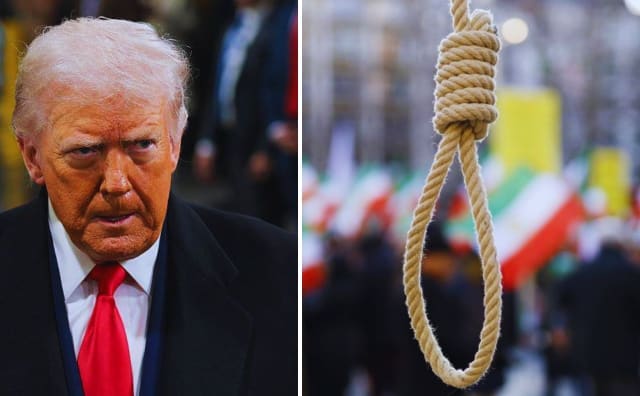
US President Donald Trump said he had received assurances that Iranian authorities have stopped killing protesters and will not proceed with planned executions, suggesting a possible easing of tensions after days of heightened rhetoric. Speaking at the White House on Wednesday, Trump said information from what he described as “very important sources on the other side” indicated that lethal force against demonstrators had been halted and that executions expected to take place were no longer planned. He stressed, however, that the United States had not yet verified these claims and said he would wait to see how the situation develops.
Trump’s remarks followed repeated statements in recent days in which he said the United States was prepared to support the Iranian people amid a violent crackdown on protests. According to Iran Human Rights, a Norway-based organization, at least 3,428 people have been killed so far and more than 10,000 arrested. Despite this, Trump offered no details about the sources of his information or how Washington would confirm it. Asked whether US military action was now ruled out, he replied that his administration would “watch it and see” how events unfold.
In a separate and unexpected development, Iranian state media reported on Thursday that Erfan Soltani, who had been widely reported as facing imminent execution, had not in fact been sentenced to death. Around the same time, Iran’s foreign minister Abbas Araghchi told Fox News that Tehran had no plans to carry out executions in response to the protests. He said hanging people was “out of the question” and insisted there was no intention to execute detainees either immediately or in the near future.
These statements contrasted sharply with earlier signals from Iran’s judiciary. On Wednesday, judiciary chief Gholamhossein Mohseni-Ejei said authorities should act swiftly against more than 18,000 people detained during the unrest, calling for rapid trials and punishments, including executions. He argued that delayed action would weaken the intended effect. His comments appeared to directly challenge Trump, who warned in a CBS interview that the United States would take very strong action if executions went ahead.
The period leading up to Trump’s comments was marked by intense regional tension and signs of possible military escalation. Iran abruptly closed its airspace to most flights early on Thursday without providing a clear explanation, prompting airlines such as Lufthansa to reroute flights away from Iranian and Iraqi airspace until further notice. Although the closure was later extended, Iran reopened its airspace several hours afterward, and flight tracking data showed some aircraft beginning to head back toward Tehran.
At the same time, US embassies across the region took precautionary measures. Some personnel at a major US military base in Qatar were advised to evacuate, while the US embassy in Kuwait ordered staff to temporarily stop traveling to the country’s military bases. In Saudi Arabia, the US embassy urged its personnel to exercise caution and avoid military installations. The US embassy in Doha also advised limiting non-essential travel to Al Udeid Air Base, which hosts US Air Force units and other foreign forces, though it said staffing levels and consular services remained unchanged.