Ticaret Savaşı Alarmı: Trump Grönland'a Baskı Yaparken AB Karşı Saldırıya Hazırlanıyor
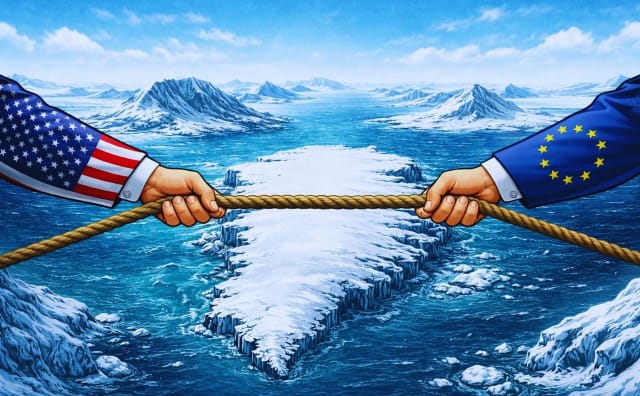
European Union institutions and national governments are weighing a range of countermeasures in response to US President Donald Trump’s threat to impose new tariffs on European allies that oppose his push to bring Greenland under American control. The possibility of retaliatory duties on US products and even the activation of the EU’s strongest economic defense tools has been openly discussed, as European leaders described the move as economic pressure bordering on blackmail.
In a joint declaration, the leaders of Denmark, Norway, Sweden, France, Germany, the United Kingdom, the Netherlands and Finland warned that tariff threats risk damaging transatlantic ties and could trigger a dangerous escalation. They stressed their determination to protect sovereignty and territorial integrity, underlining that these principles are non-negotiable.
EU foreign ministers and ambassadors met in emergency sessions over the weekend, examining options that include reviving a previously prepared package of counter-tariffs covering €93 billion worth of US goods. This package, drafted in response to earlier trade tensions with Trump, had been frozen after a trade agreement was reached last summer. The proposed measures target a wide range of American exports, including cars, industrial products, food and beverages.
French President Emmanuel Macron urged EU partners to consider activating the bloc’s anti-coercion instrument, a powerful legal mechanism designed to respond to economic pressure from third countries. Often described as the EU’s “big bazooka,” the instrument allows for sweeping trade and investment restrictions, although it has never been used since its adoption. Macron insisted that Europe must be ready to defend itself if Washington follows through on its threats.
After the crisis talks, European Council President António Costa announced that an extraordinary EU summit would be convened in the coming days, likely on Thursday, January 22. He said the discussions demonstrated Europe’s readiness to respond to any form of coercion, while still leaving the door open for dialogue.
Reactions from national leaders continued to mount. Italian Prime Minister Giorgia Meloni called the proposed US tariffs a mistake, despite her generally close ties with Trump. Dutch Foreign Minister David van Weel explicitly described the threat as blackmail. Germany’s Deputy Chancellor Lars Klingbeil said Berlin remained open to cooperation with Washington but made clear that Europe would not yield under pressure and would respond collectively if necessary.
At the same time, EU officials emphasized that there is no immediate consensus on deploying the anti-coercion instrument. Several diplomats stressed that the €93 billion retaliation package remains suspended until February 6 and that many member states still favor diplomacy over escalation. One senior EU diplomat said there was currently no formal decision to activate any trade weapon, reflecting divisions within the bloc.