
Rusya, Lviv Yakınlarındaki Saldırıda Oreshnik Füzesini Test Etmiş Olabilir
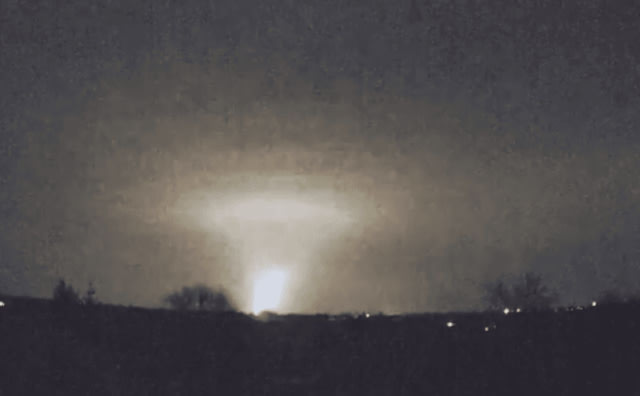
Russia may have carried out a strike on Ukrainian territory using the Oreshnik missile system, a weapon linked to long-range strategic capabilities, including nuclear delivery potential. According to monitoring groups in Ukraine and the West, Moscow appears to have authorized another launch of this system, with the missile flying toward western Ukraine. The strike, which did not carry an explosive warhead, is widely interpreted as a demonstrative and psychological act rather than a conventional military attack.
???? BREAKING: RUSSIA HAS LIKELY STRUCK LVIV REGION WITH AN “ORESHNIK” The missile was traveling at a speed of around 13,000 km/h. Ukraine’s Air Command “West” said the exact type of the weapon will be confirmed after analyzing its fragments. However, there is little doubt that… pic.twitter.com/YI42oeQNaO
— NEXTA (@nexta_tv) January 9, 2026
Reports of the possible use of the Oreshnik system emerged late on Thursday. This would not be the first such case. In 2024, Russia launched an Oreshnik missile toward the city of Dnipro without a warhead, an action analysts described as a signal of capability rather than an attempt to inflict battlefield damage. Since then, Ukrainian territory has effectively served as a testing ground for showcasing advanced Russian weapons personally associated with President Vladimir Putin’s arsenal.
In the latest incident, the missile’s apparent destination was Ukraine’s Lviv region. Analysts believe the intended target may have been the Stryi underground gas storage facility, the largest such site in Europe. This facility is vital to Ukraine’s winter energy security and also functions as a strategic gas hub for several European countries. Its role extends beyond Ukraine, supporting heating supplies for civilian populations across parts of the continent. Attacks on energy and civilian infrastructure have become a recurring element of Russia’s campaign. On the same night as the Lviv strike, Russian attacks on Kyiv damaged energy facilities and left sections of the capital without power.
Ukraine has not officially confirmed that the Oreshnik missile was used. However, Ukraine’s Air Force Command reported that at 23:47 on January 8, Russian forces launched a ballistic missile at infrastructure targets in the Lviv region. The object was tracked traveling at roughly 13,000 kilometers per hour along a ballistic trajectory, a speed consistent with the characteristics of the Oreshnik system.
Initial information suggests that the Stryi gas storage facility itself was not struck, and the exact target remains unclear. Authorities confirmed that another infrastructure site in Lviv Oblast sustained damage. As with previous launches of this missile type, the projectile reportedly carried no warhead, only an inert mass. The resulting impact crater is therefore attributed to pure kinetic force, created by a large object hitting the ground at speeds exceeding 10,000 kilometers per hour, rather than by an explosion.