ECB ve Komisyon Yetkilileri, Dijital Euro'nun Avrupa'nın Finansal ve Stratejik Özerkliğinin Anahtarı Olduğunu Söyledi
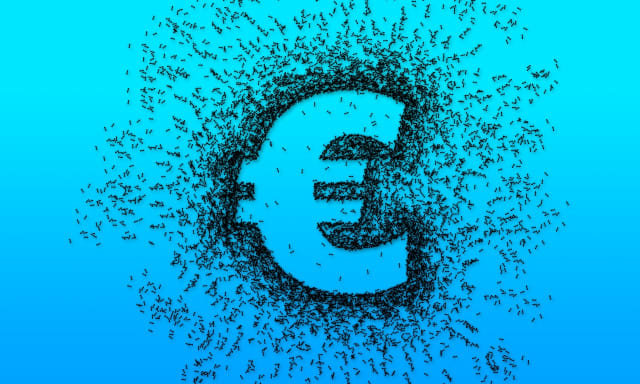
The digital euro is a crucial tool for strengthening Europe’s financial and strategic independence and will complement physical cash amid the rapid digitalisation of payments. This is stated in a joint position by Piero Cipollone, Member of the Executive Board of the European Central Bank (ECB), and Valdis Dombrovskis, European Commissioner for Economy and Productivity, published on the ECB’s blog.
In their analysis, the two officials emphasise that the digital euro will ensure safe, inclusive and efficient payment options in the digital age. According to them, the project aims to reduce the European Union’s dependence on external financial technology providers and global payment infrastructures.
The article also outlines the expected timeline for introducing the digital euro, noting that the process is currently under discussion at the European level.
Full text of their joint position:
From barter to coins, banknotes and cards, the payment systems used by Europeans have evolved constantly. Innovation has always helped make these systems more sophisticated, efficient and convenient. Today, technology is transforming our society at unprecedented speed. It is therefore natural that our currency must also adapt. Europe needs a digital euro for the digital age.
For now, the euro exists in physical form only—the banknotes and coins in our wallets. As the most tangible expression of our common currency, cash unites us. We know we can rely on it. It is accepted everywhere in the euro area. It is easy to use and inclusive. It protects privacy. It is our money, issued by a public institution—the European Central Bank.
However, more and more Europeans are choosing to pay digitally in shops or to shop online. That is why we need a digital form of cash that complements the familiar notes and coins. The digital euro is designed to address the opportunities and challenges created by this transition.
This is the purpose of the single currency package presented by the European Commission in 2023. It contains two proposals currently being discussed by European lawmakers.
The first aims to ensure that citizens and businesses continue to have access to euro banknotes and coins and can use them for payments throughout the euro area. In parallel, the ECB is developing the next generation of euro banknotes with a new design to make them more attractive, recognisable and inclusive for all Europeans, while ensuring they remain as secure and sustainable as possible. Euro cash will not disappear. Europeans will have a choice—whether to pay with physical money or with the digital euro. The digital euro is intended to complement, not replace, cash.
The second proposal sets out the framework for the digital euro. It ensures that it will be free to use, simple and inclusive. The digital euro will be accepted for all digital payments in the euro area and will meet the highest privacy standards, similar to cash. It will be usable both online and offline, supporting digital payments on websites as well as transactions without an internet connection.