Cumhurbaşkanının Çıkışından Sonra: Analistler Siyasi Şok Dalgalarını ve Bulgaristan İçin Sırada Ne Olduğunu Değerlendiriyor
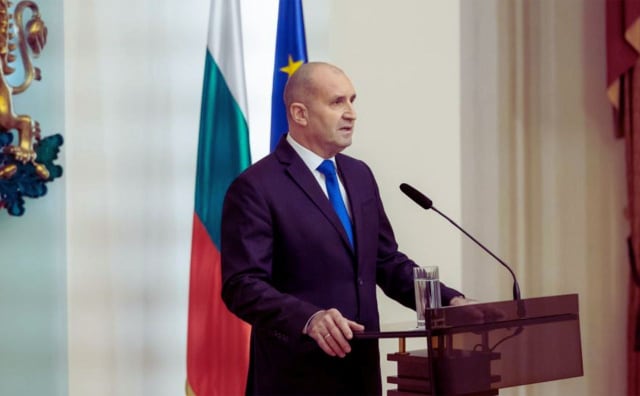
Political analysts broadly agree that President Rumen Radev’s resignation is a calculated step tied directly to his expected entry into electoral politics. According to Dimitar Ganev from Trend agency, the timing leaves no practical window for registering a new political party. Instead, Radev is expected to participate in the elections through a coalition format, a model already used in previous election cycles, whereby several registered parties unite behind a single political project.
Ganev underlined that, from this point forward, the entire constitutional procedure shifts to Vice President Iliana Yotova. She will initiate consultations with parliamentary forces to nominate a caretaker prime minister, after which early parliamentary elections must be held within two months. Among the names circulating are Andrey Gyurov and figures linked to the established political order. In Ganev’s assessment, Radev’s resignation at this specific moment is intended to distance him from the formation of a caretaker cabinet, thereby avoiding accusations that he influenced the administration responsible for organizing elections in which he himself will run.
Mobilization of voters and a reshaped political field
Political scientist Tatyana Burudzhieva sees Radev’s move as a catalyst for reactivating left-wing voters, many of whom have long regarded him as their representative. She argues that his formal entry into politics will consolidate parliamentary dynamics and increase turnout among voters seeking clearer representation on the left. In her words, Bulgarian voters are being offered new choices at a moment when competition for first place is only beginning.
Burudzhieva described the resignation as a morally correct decision, particularly because it came before the appointment of a caretaker prime minister. In her view, the step should ideally have been taken even earlier, but the essential point is that Radev avoided shaping a transitional government from which he would later seek electoral benefit. She also suggested that, even without registering a party of his own, Radev could rely on an already registered political formation whose candidate lists are likely prepared in advance.
At the same time, Burudzhieva cautioned that while Radev may attempt to appeal to a broad electorate by maintaining a presidential, statesman-like posture, his strongest base remains among left-leaning voters. Expanding beyond that circle, she noted, will be considerably more difficult, though the campaign itself is likely to be competitive and unpredictable.
Criticism of past governance and limits of protest politics
Hristo Panchugov offered a more critical reading of Radev’s trajectory, arguing that the idea of a “presidential project” had largely been exhausted by the institutional role Radev played during the prolonged political crisis. Panchugov pointed to repeated caretaker governments, unresolved scandals, and mismanaged crises, including the second wave of COVID-19 ahead of earlier presidential elections, as factors that weakened confidence in the presidency as a vehicle for systemic change.