Bulgaristan: Radev'in İstifasının Ardından Parlamento, Müttefikler ve Siyasi Yön Hakkında Sorular Ortaya Çıktı
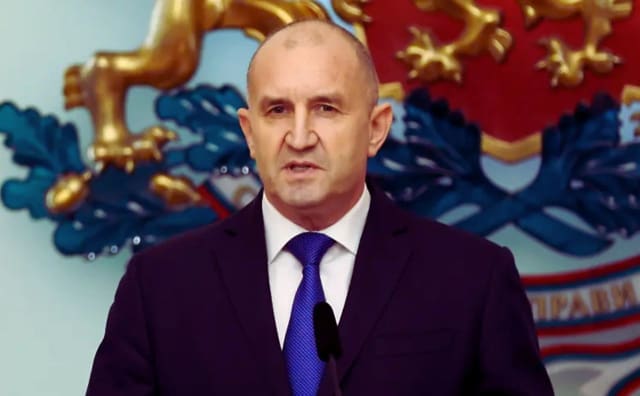
The political landscape in Bulgaria is entering uncharted territory following President Rumen Radev’s resignation, with key questions arising about his future role, potential parliamentary majority, and the allies who may back him. Sociologist Evelina Slavkova from Trend highlighted that the process of appointing an acting prime minister has likely been paused due to the pending Constitutional Court ruling and the president’s decision to step down. In the coming days, the makeup of Radev’s political movement and the individuals who will support him are expected to become clearer. Slavkova noted that Radev’s immediate objective will be to secure a majority in parliament while maintaining distance from the selection of a caretaker prime minister and the interim cabinet.
Parvan Simeonov, a sociologist from the Myara agency, described Radev’s move as bold, emphasizing the numerous unknowns it presents. In his resignation speech, Radev targeted nearly every political figure and group, from established leaders like Borissov and Peevski to radical formations, leaving few allies publicly acknowledged. Simeonov suggested that if the numbers allow, Radev could govern independently, although securing the 121-deputy majority may not be enough for broader reforms such as judicial changes, which could require up to 160 votes. He also observed that Radev has had years to prepare for this move and has maintained a polite line of communication with the opposition power "We Continue the Change-Democratic Bulgaria" (WCC-DB), which could form the basis of a possible coalition, albeit not without potential resistance from other partners.
Journalist Ruja Raicheva noted the weight of the responsibility Radev assumes, with different groups perceiving him either as a traitor or a savior. She emphasized that the president’s actions come amid a politically fragmented nine-party parliament, lacking centrist voices capable of bridging polarization. According to Raicheva, Radev will need to define his stance clearly during an election campaign, whether as a centrist, a balancing figure, or a more extreme alternative.
PR expert Georgi Kurtev argued that Radev’s positioning remains ambiguous, particularly regarding Bulgaria’s foreign orientation, and described his approach as pseudocentrism. Political scientist Stoycho Stoychev suggested that Radev could find a partner in the WCC-DB, noting his moderate positions on key issues and careful approach to promises. Raicheva added that Boyko Borissov is likely to approach Radev cautiously, leaving multiple political options open, while questioning the level of trust between GERB and the WCC-DB should they cooperate with the president’s project.
Analysts confirmed that Radev’s resignation will delay consultations for a caretaker prime minister. Prof. Plamen Kirov explained that following the Constitutional Court’s decision to terminate Radev’s mandate, Vice President Iliyana Yotova will assume the presidency temporarily, maintaining continuity until the term’s end (scheduled for January 2027). Kirov noted that while there is no legal barrier for Andrey Gyurov or a GERB-affiliated caretaker prime minister, political considerations will play a key role. He also highlighted that the state budget may remain unresolved until mid-2026 and stressed the high stakes for upcoming presidential and parliamentary elections.