AB, Trump'ın Grönland Hedeflerini Ortadan Kaldırmak ve NATO'yu Korumak İçin Anlaşma İstiyor
European governments are urgently searching for a compromise over Greenland that would allow U.S. President Donald Trump to present a political win at home, without triggering a crisis that could unravel NATO and the broader European security architecture. According to several diplomats and an EU official cited by POLITICO, the prevailing approach in European capitals is to de-escalate tensions and seek accommodation rather than confrontation, despite Trump’s repeated claims that the United States “needs” Greenland and his refusal to rule out the use of force.
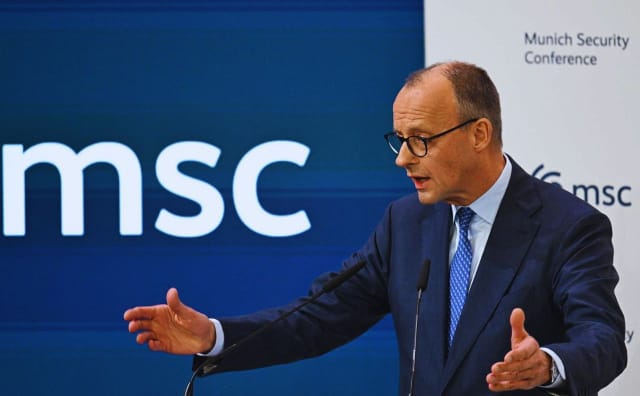
Possible options under discussion range from strengthening NATO’s role in Arctic security to offering the United States economic incentives, including access to Greenland’s mineral resources. German Foreign Minister Johann Wadephul said discussions with U.S. Secretary of State Marco Rubio on the issue had been “encouraging,” while Chancellor Friedrich Merz expressed hope that a “mutually acceptable solution” could be reached within NATO frameworks.
Diplomatic engagement is intensifying. Greenland’s and Denmark’s foreign ministers are expected to meet U.S. Vice President JD Vance and Rubio at the White House, with European officials describing the goal as an open and frank exchange with the U.S. administration.
Several diplomats believe a potential deal could be structured in a way that allows Trump to claim success domestically, for example by securing greater European investment in Arctic defense and guarantees that American companies would benefit from Greenland’s critical raw materials. One EU diplomat noted that repackaging Arctic security commitments together with mineral cooperation could be politically attractive to Trump, citing past experiences where U.S. pressure led European allies to increase defense spending.
NATO Secretary General Mark Rutte has already hinted at discussions within the alliance on boosting Arctic security, potentially opening the door to higher European defense contributions in the region. While concrete proposals remain undefined, such steps could align with Washington’s long-standing demand that Europe take on more responsibility for its own defense.
Mineral extraction remains more complex. Greenland currently has limited capacity to exploit its critical resources, and Denmark has struggled for years to attract large-scale investment, as global markets offer cheaper alternatives. Nevertheless, the EU plans to significantly increase funding for Greenland in its next long-term budget, including support for raw materials projects. This expanded investment could form the basis of a joint EU-U.S. initiative.
Diplomats also point out that Denmark has previously invited U.S. investment in Greenland, offers that were declined. If Washington’s underlying concern is countering Chinese or Russian influence, European officials argue that the U.S. could simply request an expanded American military presence on the island.